

Why I Started Printable Menu Lab — Margot Ellery
An Essay by the Editor
The woman in the
back of the print shop.
On why I started Printable Menu Lab, and what twelve years of fixing other people’s typography taught me about the people who actually design their own materials.
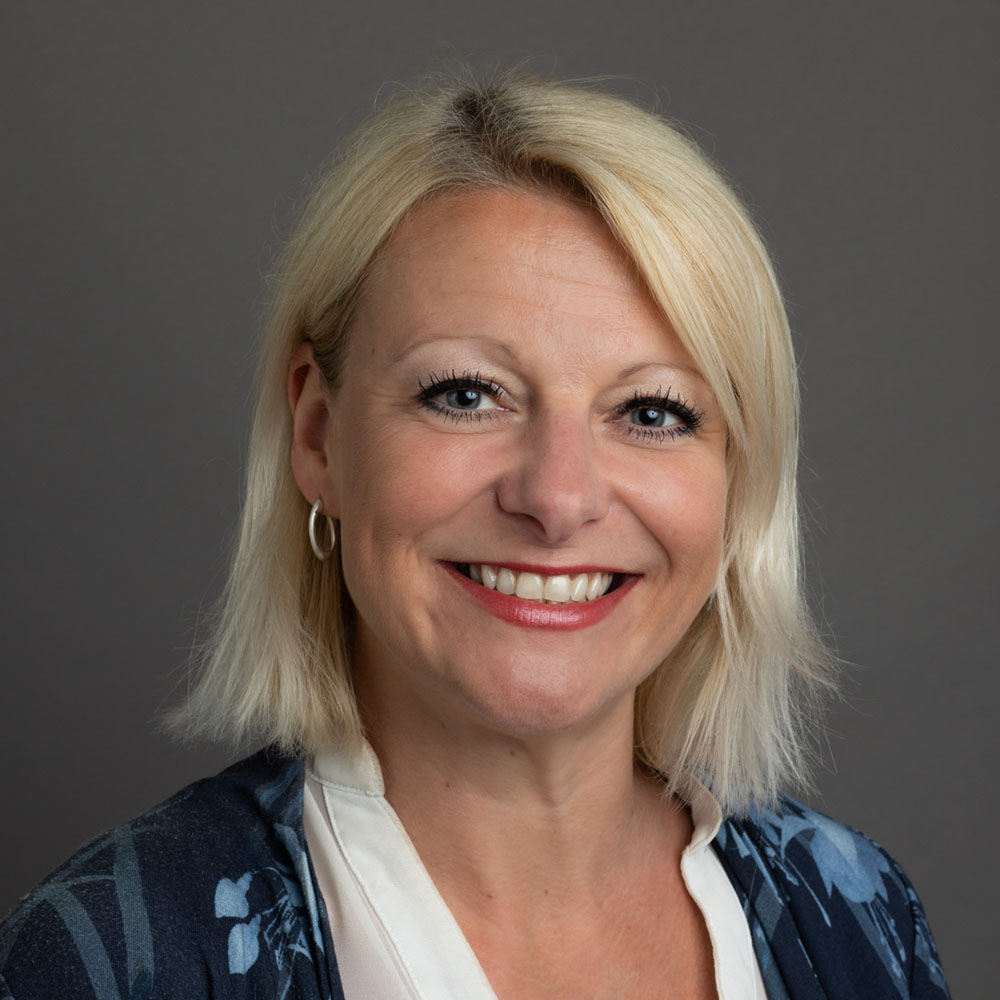
By Margot Ellery · Editor
The printer in Hackney is called Frank. He has run the same shop for thirty-one years, and the first time I went in there with a menu I was particularly proud of, he held it up to the light, frowned at it for about six seconds, and then told me — with the patience of a man who has been doing this since I was a child — that I had set the body text in Bodoni and the headers in Didot, and that the entire menu was going to print as a wall of identical thin verticals on cream stock.
I had been a working graphic designer for six years at that point. I had a degree from Central Saint Martins. I had spent the previous four months on a magazine masthead redesign at one of the larger UK monthlies. I should have known that pairing two display serifs from the same family is the typographic equivalent of wearing two of the same scarf, and yet there I was, in Frank’s shop, getting kindly schooled in front of a queue of pensioners waiting to photocopy parish newsletters.
I am telling you this not because it was particularly humiliating — it was, mildly — but because Frank was right, and I still think about it. The thing that no amount of design school had quite drilled into me was that the printed object lives in the physical world. It catches the light a certain way. It rests on a tablecloth that was washed three times this week and is slightly grey. It gets held by a customer who has had two glasses of wine and is squinting through reading glasses that need a new prescription. None of that is in the brief. All of it determines whether your work succeeds.
I spent the next decade in design studios and editorial monthlies. Some of them I loved. Some of them taught me what to never do again. Toward the end of that decade — this would have been around 2022 — something shifted that I want to describe carefully, because it is the reason this publication exists.
The cafe at the end of my road got new menus. They were lovely. I noticed them because the typography was thoughtful in a way that suggested someone had cared — not a designer’s care, exactly, but a curatorial care. Someone had chosen a typeface that wasn’t the obvious one. Someone had thought about the spacing between sections. Someone had decided to print on a slightly heavier card stock than was strictly necessary.
I asked the owner who had designed them. She laughed and said she had done it herself, on Canva, over a long Sunday afternoon with a glass of wine and her teenage daughter offering opinions about the colour palette. She had not been to design school. She had not hired a designer. She had used a free tool that did not exist when I started my career, picked a template that she made progressively less template-like over several iterations, and produced a piece of work that, with one or two small reservations I will keep to myself out of professional courtesy, was genuinely good.
I walked home thinking about this for the rest of the afternoon. The thing I had spent twelve years training to do had been done, perfectly adequately, by a cafe owner over the course of a Sunday. And not as an anomaly. Once I started looking, I started seeing it everywhere. The fundraiser flyer at my GP’s waiting room had clearly been designed by someone’s daughter and was better than half the printed material in the surgery. The wedding invitation a friend sent me had been built in Canva from a paid Etsy template, customised to within an inch of its life, and was — honestly — one of the most beautiful pieces of personal stationery I had received that year.
The barrier to producing a good-looking menu used to be access to a designer. The barrier now is knowing which of the seventeen near-identical templates to choose, and what to change about it.
A Working Observation
What had happened, I realised, was that the entire infrastructure of small-scale print design had quietly relocated. The work itself had not changed — menus were still menus, certificates were still certificates, the design challenges were the same ones I had spent my career solving. But the people doing the work had changed. The cafe owner had replaced the cafe owner’s designer. The fundraiser volunteer had replaced the fundraiser’s design intern. And the tools had quietly become competent enough that this substitution worked, most of the time, for most cases that mattered.
I started keeping a notebook. Not a professional notebook — one of those small black Moleskines you can buy at any stationer, the kind I had used in my first design job to sketch headlines while sitting on the Northern line. I started writing down the things I noticed. Where a template fell apart when someone tried to customise it. Which platforms got the small things right and which ones broke when you needed to print double-sided. The single most common mistake non-designers made — using four typefaces because all four of them looked nice individually, which is the same impulse as wearing all your favourite jewellery to the same dinner party. The templates I would happily pay for, and the ones being sold for fifteen pounds that should never have been published.
After about a year of this, I had a notebook full of observations and a growing sense that nobody was writing about any of it. The trade design press wrote for designers, who were largely uninterested in tools made for non-designers. The non-designer-facing platforms wrote about themselves, of course, but mostly in marketing copy. And the broader media wrote about Canva as a business story, which is fine, but not as a craft story, which is what most users of Canva actually need. There was a gap, and I had spent a year accidentally researching it.
What Printable Menu Lab is, and what it is not.
Printable Menu Lab is the publication I wanted to read when I was at Frank’s print shop holding up an indefensible menu, and the publication I wanted to write after a year of keeping that notebook. It is a small editorial project covering printable templates, design tools, and the practical knowledge that helps non-designers produce work they are not embarrassed by. We review templates. We compare platforms. We write tutorials on the small craft decisions — type pairing, hierarchy, white space — that separate work that looks designed from work that looks decent.
It is not a marketplace. We do not sell templates. We do not run a Canva account. We have no platform we are trying to drive traffic toward beyond our own modest archive. We accept no sponsorship that disguises itself as editorial. Where we earn affiliate commission from template marketplaces we recommend, we disclose it in the post and the recommendation came first, the commission second. I have, in my career, written enough sponsored content disguised as editorial to know exactly how it warps the work. I am not interested in repeating that here.
It is also not a publication that pretends graphic design is harder than it is. There are roughly six things that beginners need to know about typography to produce work that does not embarrass them, and they can be learned in an afternoon. There are roughly four things you need to know about layout, and they can be learned in another afternoon. The professional mystique around design is mostly a guild protecting itself. The actual craft, taught well, is accessible. I have watched cafe owners produce better menus than the design students I used to crit. The mystique should have come down a long time ago.
Who I am writing for.
I write this publication for the cafe owner who designed her own menus on a Sunday afternoon. I write it for the village hall committee member who has been put in charge of the summer fete posters and does not know where to start. I write it for the small jewellery maker who needs price tags that look like they came from a real shop. I write it for the small primary school deputy head printing the end-of-year certificates and wanting them to feel like something, even on a sixty-pound budget.
I write it for everyone who has stood in front of a print shop counter holding work they made themselves and felt the small, particular anxiety of not being sure if it is good. That feeling is what brought me into design in the first place, and watching other people resolve it — with their own hands, on their own laptops, without a designer in sight — is the thing that keeps me writing about it now.
If any of that describes you, you are exactly who I had in mind. Write in. Tell me what you are working on. I read everything and reply to most things, eventually, often during the second cup of coffee in the morning when the studio is quiet and the day has not yet broken into proper work.
Frank, the printer in Hackney, is still there. I still bring him work occasionally. He is now eighty-one and continues to be the most reliable typography critic in north London. The last menu I designed, three weeks ago, was for a tiny Greek restaurant on the high street that has been trying to update its image without losing the regulars. I set the body text in Source Serif and the headers in a quiet sans called Untitled. Frank held it up to the light, frowned at it for about six seconds, and then said it would do.
That is what I am trying to do here, scaled to everyone who never had a Frank: write things that hold up to the light. I am very glad you are reading.
Margot Ellery
Editor · Printable Menu Lab